Design Challenges of Battery Management and Energy Storage Solutions: Meeting Europe’s Renewable Energy Goals
By Ros Kruger, Director Technical Marketing, TTI Inc.- Europe
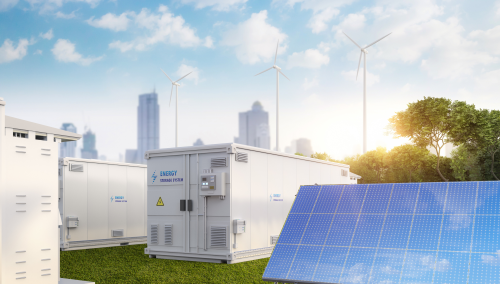
Europe’s ambitious target of generating 45 percent of its energy from renewable sources by 2030 is reshaping the energy landscape, ushering in a technological challenge for the industry as a whole. As the continent seeks to reduce its reliance on fossil fuels and transition to cleaner energy sources, the development of advanced battery management and energy storage solutions is critical. This article explores the design challenges and innovations required to address the evolving needs to achieve these renewable energy goals.
The Growing Demand for Energy Storage
Batteries have emerged as a pivotal technology in the quest for a sustainable and renewable energy future. They play a multifaceted role in the energy ecosystem, from supporting large-scale solar and wind farms to enhancing energy efficiency at the household level.
- Household-level energy independence
In traditional solar setups without storage, excess energy is often exported to the grid when it’s not needed, and households have to buy electricity from the grid when the sun isn’t shining. This excess energy can be stored and used with batteries, reducing reliance on the grid and lowering electricity bills. This can increase self-consumption rates from around 30% (in non-storage systems) to as much as 70% or more. Batteries also provide energy resilience during grid outages. In the event of a power cut, a home with a solar panel and battery system can continue to operate essential appliances like central heating and lighting, ensuring comfort and safety for the occupants. - Storing renewable energy
Solar and wind energy are inherently intermittent, dependent on weather conditions and daylight hours. Batteries provide a crucial solution by ‘time-shifting’ energy production and consumption. During periods of peak renewable energy generation, such as a sunny afternoon or a windy night, excess energy can be stored in batteries. This stored energy can then be released back to the grid during periods of peak demand, ensuring a constant and reliable energy supply. By offering ancillary services like voltage control and frequency regulation, batteries enhance the overall stability of the grid. This is especially critical as the share of renewable energy sources in the grid mix continues to grow.
The crucial role of battery management
At the heart of any battery energy storage system lies the battery management system (BMS). This core technology is responsible for monitoring, controlling, and optimising the performance of individual battery cells within a larger battery pack, and ensuring the longevity and safety of battery packs.
One of the foremost concerns with batteries is the risk of thermal runaway - a potentially catastrophic event where a battery overheats and can catch fire or, worse still, explode. To mitigate this risk, the integration of gas sensors is crucial for early warning detection. These sensors can identify the various gases emitted as the battery heats up. With the help of temperature sensors and various control mechanisms, any temperature fluctuations within the battery pack can be managed to ensure it remains within the safe operation area (SOA).
Optimising the efficiency and lifespan of batteries requires accurate monitoring of state-of-charge (SoC) and state-of-health (SoH). Applying advanced algorithms to the data gathered from current sensors helps determine the battery’s remaining capacity more accurately. Residual current detection is essential for identifying potential faults or short circuits within the battery system. Here, current sensors also play a crucial role in monitoring and addressing such safety issues promptly.
With 5G connectivity and high-end antennas, wireless battery management in the field is becoming increasingly viable. At home, wireless modules for widely adopted protocols, such as WiFi or Bluetooth, are available fully tested and pre-certified, enabling a faster route to market. This wireless connectivity allows real-time monitoring and control of battery systems without the need for physical connections, enhancing flexibility and scalability.
Connectivity and Modularity
Effective, adaptable, and modular connectivity components are becoming increasingly common in batteries and management systems. Batteries are expensive to make and cell interconnect designs are becoming more complex. As battery production scales up, the development of efficient manufacturing processes is essential. At the same time, optimising the flow of electricity within the battery pack, reducing energy losses and improving overall system efficiency are priority design requirements. Here, custom flex circuit technology can help speed up assembly. Alternatively, the modularity and customisability of busbars allow for easy scaling, maintenance, and replacement of individual components, reducing downtime and costs.
High-reliability power connectors are essential to ensure efficient energy transfer between the batteries and the connected systems. These connectors need to withstand high currents and ensure minimal energy loss.
Printed Circuit Board (PCB) connectors play a critical role in connecting various components within the battery management system. High-reliability connectors ensure secure and efficient connections, reducing the risk of failure.
Compliance, Safety and Reliability
In many applications, batteries are used for both charging and discharging. Efficiently managing bi-directional power flow is a complex challenge. The ability to switch between charging and discharging modes seamlessly while maximising energy efficiency is a key design consideration.
Also, where fast and reliable emergency disconnection of high DC voltages is required, high-voltage contactors are critical. Depending on the type, they can switch off high continuous DC currents and DC voltages in 30ms or less, adhering to strict safety standards and regulations. Contactors are coming onto the market that have a bi-directional design, reducing design complexity and system cost.
Managing larger-scale energy storage systems requires sophisticated control and monitoring of energy flows to maximise efficiency and grid stability. Bi-directional power supplies and configurable power supplies are vital components of such systems because they allow for precise control over energy transfer and adaptation to the characteristics of the energy storage technology in use. These features enable energy storage systems to contribute to grid stability, support renewable energy integration, and provide backup power during outages while maintaining high efficiency and reliability.
For metering, particularly in systems that involve bi-directional power flow, compliance with the Measuring Instruments Directive (MID) ensures accurate measurement of energy sent back to the grid and billing of electricity usage.
Conclusion
The design and implementation of battery management and energy storage solutions are essential steps in Europe’s transition to a more sustainable and renewable energy landscape. From thermal runaway detection to high-voltage contactors, each component plays a critical role in ensuring the safety, efficiency, and reliability of battery energy storage systems. Meeting these design challenges head-on will not only drive technological advancements but also contribute to a cleaner, greener, and more efficient energy ecosystem. TTI Europe, with its broad product portfolio of sensors, connectors, passives, antennas, circuit protection and power supplies, can offer technical support and guidance for a best-fit solution for BMS and Energy Storage applications. Need help? Ask the Expert - https://www.ttieurope.com/content/ttieurope/en/resources/ask-the-expert.html