Powering up for Defence and Aerospace: Automotive-Grade Power MOSFETs Take the Stage

By Fabio Miduri, Technical Development Manager, TTI Europe
The defence and aerospace market is an exceptionally demanding sector, requiring high-performance electronic components. Characterised by its stringent requirements for reliability, quality, and long-term availability, this sector constantly drives advancements in component design and supply chain management. This article explores the evolving trends within the industry, emphasising the importance of advanced packaging designs, particularly for high-power semiconductors, and high board-level reliability in meeting these requirements.
Emerging trends shaping the defence and aerospace electronics sector
The defence and aerospace market is characterised by a diverse range of advanced systems, including airborne systems, satellites, GPS systems, flight control computers, cockpit panels, braking systems, and drones. These applications demand components that not only deliver robust performance but also manage power efficiently to meet the stringent requirements of these high-stakes environments. As the sector evolves, manufacturers are increasingly seeking innovative solutions from other industries to address these challenges.
The automotive industry, renowned for its leadership in innovation, cost efficiency, and production scalability, offers valuable lessons for the defence and aerospace sector. By leveraging proven automotive technologies that have undergone rigorous testing and validation in high-reliability environments, manufacturers can accelerate their innovation cycles, reduce costs, and better align with the rapidly changing demands of the market.
Automotive-grade power MOSFETs exemplify this cross-industry innovation. Engineered for superior performance, durability, and reliability in extreme environments, these components meet the growing demand for reliability, efficiency, and power density in defence and aerospace applications. They provide a robust alternative to traditional MIL-STD-11991 and MIL-PRF-19500 standards for non-hermetic applications, while also demonstrating compliance with the AEC-Q101 standard. This makes them a compelling solution for manufacturers seeking to balance cost, scalability, and performance in mission-critical environments.
Advanced Packaging for Enhanced Reliability
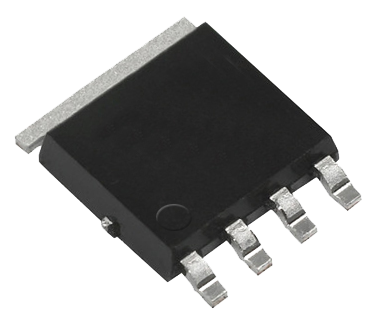
Recognising the demand for components that perform reliably in harsh environments, Vishay offers a wide range of advanced packaging solutions designed to optimise thermal efficiency. Among these, the PowerPAK® series stands out, offering significant advantages in terms of higher current and power density compared to traditional transistor-outline (TO) packages.
To meet the stringent AEC-Q101 standard, Vishay’s automotive-grade MOSFETs undergo rigorous testing. These tests include High-Temperature Gate Bias (HTGB), High-Temperature Reverse Bias (HTRB), temperature cycling, pressure pot, power cycling, Highly Accelerated Stress Test (HAST), solder dunk, and solderability. In many cases, Vishay’s new technology platforms exceed the AEC-Q101 requirements by up to a factor of two, providing additional design headroom and demonstrating the company’s commitment to robustness. This “comfort zone” is particularly valuable for defence and aerospace applications, where reliability is non-negotiable.
Indeed, board-level reliability (BLR) testing and reporting for the PowerPAK packages go beyond component-level qualification - it assesses device performance when mounted on a PCB. The PowerPAK SO-8L and 8x8L packages are engineered with gullwing leads, which play a critical role in providing stress relief for solder joints. This design enhances mechanical reliability, particularly under conditions of vibration or thermal cycling, which are common challenges in defence and aerospace applications.
BLR tests include vibration, PCB bending, rapid thermal cycling (2000 cycles), and powered temperature cycling (2600 cycles). These extensive tests ensure the long-term reliability of the components in real-world operational conditions, particularly relevant for dynamic defence and aerospace environments.
Vishay maintains a focus on continuous reliability monitoring, targeting a defect rate of less than 20 parts per billion (ppb). This commitment, combined with rugged process and package designs, makes Vishay’s power MOSFETs the trusted choice for demanding avionics, defence, and space systems requiring high performance in extreme environments.
Advanced packaging solutions, such as Vishay’s PowerPAK, offer unique benefits over traditional surface-mount packages and, in the majority of cases, comply with industry-standard form factors and PCB footprints. By enabling flexibility in component sourcing, engineers can mitigate risks and address supply chain concerns.
TTI’s role in engineering development
The adoption of new technologies and components in the defence and aerospace sectors presents unique challenges. Purchasers in these industries must address the complexities of managing component obsolescence while ensuring strict compliance with industry-specific quality standards. Robust quality management systems and adherence to certifications such as EN/AS9100 are not merely technical formalities, they are essential safeguards for maintaining supply chain integrity, ensuring product reliability, and mitigating risks in this highly regulated environment.
TTI Europe plays a pivotal role in supporting engineering development within the defence and aerospace sector. As a specialist distributor with deep expertise in this market, TTI collaborates with leading manufacturers, including Vishay, to provide high-performance, application-relevant components. By expanding its portfolio of power semiconductors and offering comprehensive technical support, TTI helps engineers navigate the complexities of modern power system designs.
Experienced development teams with specific expertise in the defence and aerospace industries back TTI’s local technical product support. This support goes beyond technical specifications, offering valuable insights into high-demand components, device lifespans, and emerging packaging technologies. For example, TTI actively advises on adopting advanced packaging options, such as footprint-compatible solutions, to ensure products remain competitive, technologically advanced, and future-ready.
The company’s dedication to quality is evident in its robust business systems, which are designed to manage complex supply chain logistics and demands. TTI was the first distributor in both the US and Europe to achieve ISO 9001 and EN/AS9100 certifications, and it also holds IECQ Registration in Europe. These certifications underscore the company’s commitment to quality assurance and supply chain integrity.
Moreover, TTI’s expertise in managing change notices, obsolescence, and last-time buys is critical for providing long-term program support. This capability ensures that manufacturers can rely on TTI for consistent, high-quality service throughout the lifecycle of their projects.
Conclusion
The defence and aerospace sector demands unparalleled reliability, efficiency, and innovation in electronic components to meet the challenges of mission-critical applications. Automotive-grade power MOSFETs, with their proven performance in extreme environments, are emerging as a transformative solution for this industry. Complying with rigorous AEC-Q101 standards, these components, using advanced packaging technologies, deliver enhanced thermal efficiency and mechanical reliability. This positions them as a robust alternative to traditional MIL-spec components, offering a compelling balance of cost, scalability, and performance.
The adoption of automotive-grade technologies underscores the growing trend of cross-industry innovation, where lessons from the automotive sector are applied to address the stringent demands of defence and aerospace. This approach not only accelerates innovation cycles but also ensures long-term reliability and supply chain resilience.
TTI Europe plays a pivotal role in this ecosystem, bridging the gap between cutting-edge component manufacturers and the unique needs of defence and aerospace engineers. Through its technical expertise, robust quality systems, and commitment to supply chain integrity, TTI empowers manufacturers to navigate the complexities of modern power system designs. Together, these advancements are powering the next generation of defence and aerospace technologies, ensuring they remain reliable, efficient, and future-ready.