Advanced Electronics Markets Are Reshaping Capacitor Demand in 2026/2027
08/07/2026 //
Where are the growth opportunities for capacitors? Ten emerging and adjacent end-use product market clusters are driving demand for advanced bypass, decoupling, filtering and burst-power solutions across electrostatic, electrolytic and exotic capacitor technologies.
Passive Electronic Components Demand Intensity Across 10 Emerging/Adjacent Markets: 2026/2027
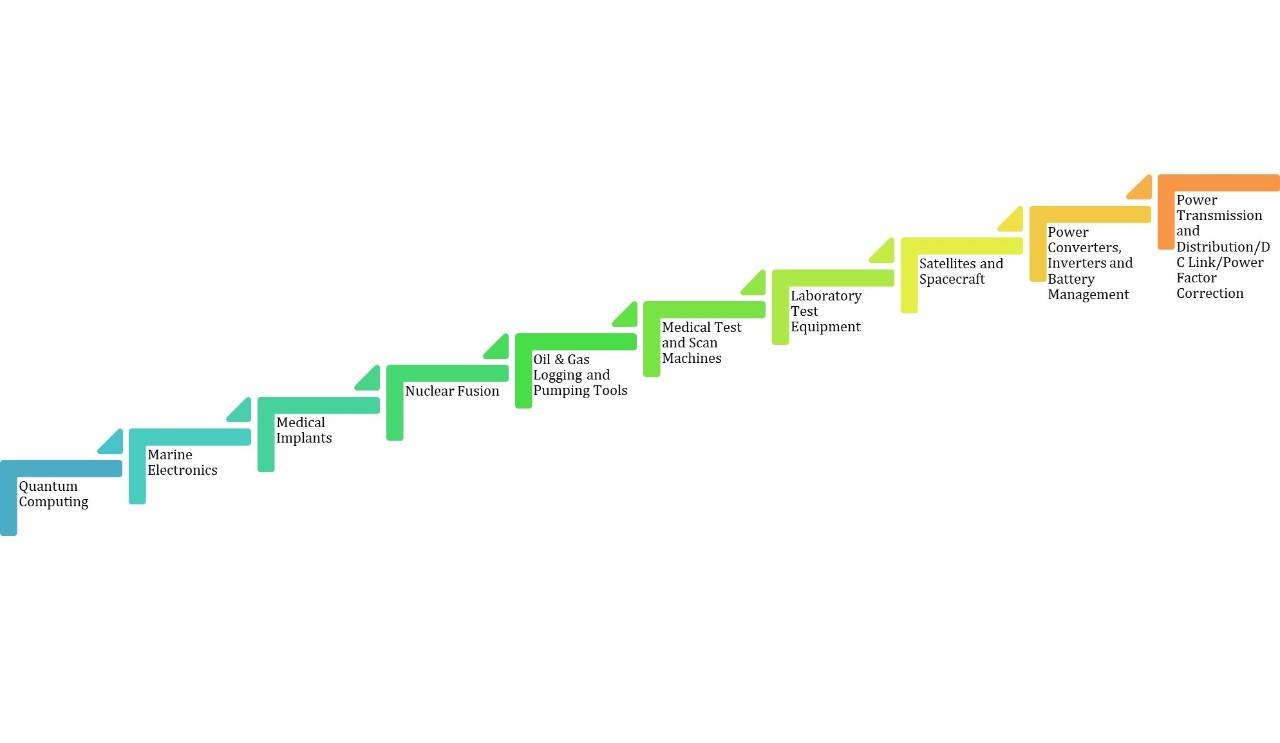
Figure 1. Our qualitative assessment of passive component demand intensity across ten emerging and adjacent end-use markets.
We know through primary discussions with key folks in the ecosystem that nuclear fusion is the next buzzword in the high-tech economy for power generation, and that, likewise, quantum computing is also expected to have a major impact on advanced and exotic capacitor solutions, with each of these end markets creating new market opportunities for high EBITDA parts.
Meanwhile existing markets in medical technology and laboratory test and measurement equipment with similar capacitor requirements are expected to continue to create a dual engine for profitable growth for capacitor manufacturers. Oil and gas electronics, satellites, spacecraft, Class 7/8 trucks and marine electronics are also high-premium end-markets sharing exposure to harsh environment as a primary motivator. In spacecraft and logging tools, advanced requirements include operation under extreme voltage, frequency, temperature and vibration.
Power Transmission and Distribution Systems
Grid modernization, the renewable-energy buildout and continued growth in demanding industrial and subsurface electronics form the largest and most immediate cluster of the product markets covered here, in terms of near-term passive component value.
Grid interconnection queues for renewable generation, continued HVDC transmission buildout and broader grid-modernization investment are all driving higher power-electronics content in transmission and distribution infrastructure. This creates significant opportunities in the DC link architecture that converts the alternative energy into electricity – and with it, demand for large polypropylene dielectric film capacitors, large-can and snap-mount aluminum capacitors and high-power polypropylene snubber capacitors used in grid-tie inverter applications. This is a significant market opportunity for large-can capacitors for 2026/2027 to support net new demand from hyperscale data centers and electric vehicle charging stations.
Power Converters, Inverters and Battery Management Systems
Every one of the other nine markets in this column ultimately depends on power conversion, which makes this the connective tissue of the whole list. Two forces are reshaping it specifically. First, AI data center power infrastructure, which is driving demand for higher-current, lower-ESR solid polymer tantalum and solid and liquid polymer aluminum components at a pace few other end markets can match. Second, the continued adoption of wide-bandgap (GaN and SiC) semiconductors, which push switching frequencies higher and generally shrink passive component size toward the high capacitance base metal electrode multilayered ceramic chip capacitor (for 105°C operation) while tightening performance tolerances.
Satellites and Spacecraft
The commercial “New Space” buildout — large low-earth-orbit constellations, growing commercial launch cadence and expanding government space investment — has meaningfully widened the addressable market for radiation-hardened and space-qualified passive components beyond the traditional defense and civil-space primes. Every satellite bus carries a substantial complement of high-reliability capacitors and precision resistors in its power and telemetry systems, and constellation-scale production volumes are a genuinely new dynamic for a category historically defined by low unit volumes and long qualification cycles.
In the satellite and spacecraft arena, demand is specifically military specification components or custom ruggedized components built to a unique specification under military precision of manufacturing. Plastic film capacitors, ceramic capacitors and tantalum capacitors are the key parts required for this exotic application, along with specific types of plastic film, including PTFE and PI, the preferred space dielectric for its healing properties.
Laboratory Test and Scan Equipment
Precision instrumentation — oscilloscopes, calibration references, data acquisition systems — remains one of the steadiest homes for ultra-precision, low-noise ceramic capacitor technology in the entire passive component industry. Demand here tracks R&D and capital equipment spending broadly, but the component-level requirements are consistently among the tightest tolerance specifications this column covers.
Medical Test and Scan Equipment
MRI, CT and ultrasound systems depend on precision analog measurement circuits built around ultra-stable, low-TCR ceramic and tantalum capacitors, alongside high-voltage polypropylene plastic film capacitors in X-ray and imaging power supplies. As imaging resolution and scan speed both continue to improve generation over generation, the precision-component content per system has generally moved in the same direction — upward.
Oil and Gas: Logging Tools and Downhole Pumps
Downhole electronics operate in one of the harshest thermal and mechanical environments in commercial use – sustained temperatures above 175-200°C in deep wells, combined with extreme vibration and shock. This has long been a specialty niche for high-temperature-rated ceramic and tantalum capacitors and ruggedized resistor packaging. It remains one of the more durable, less-cyclical demand pools in the industrial passive component landscape, tracking drilling and well-intervention activity more than broader electronics cycles. It also consumes exotic solutions such as PTFE.
Nuclear Fusion Systems
Fusion has moved from a multi-decade research horizon to a funded, near-term engineering problem, with both public programs and well-capitalized private developers advancing toward net-energy demonstration systems this decade. The passive component opportunity here is concentrated and specific: pulsed-power capacitor banks for plasma initiation and heating systems, precision current-sensing resistors for superconducting magnet power supplies and high-voltage, high-energy-density capacitors capable of surviving repeated rapid discharge cycles. This application favors polypropylene plastic film capacitors at multiple levels.
Medical Implants
Pacemakers, neurostimulators and implantable drug-delivery devices have relied on specialty aluminum electrolytic and solid tantalum capacitors for decades precisely because of tantalum and aluminum ruggedized hermetic packaging options and long-term reliability track record — a device that cannot be opened for service after implantation has essentially zero tolerance for component-level failure. Extreme miniaturization and multi-year battery-life targets continue to push implant electronics toward lower-leakage, higher-volumetric-efficiency capacitor technology, keeping this a persistently demanding, premium-priced corner of the capacitor market. Medical implants and medical test/scan equipment fit together for a reason: both demand the highest tier of component reliability the industry produces, but they arrive at that requirement from different directions – one through miniaturization and battery-life constraints, the other through measurement precision.
Marine Electronics
Saltwater corrosion resistance, humidity and vibration define the baseline requirement for marine navigation, communication and sonar electronics, much as they have for decades. What has changed is the growing commercial and naval investment in autonomous surface and underwater vessels, which adds a meaningfully more sophisticated sensor and power-electronics payload to a market that had been comparatively stable in its component requirements. Plastic film capacitors work best in harsh environments because of their healing nature, with polymide exotic film capacitors used in specific applications where corrosion resistance is paramount.
Quantum Computing
This column profiles the technical requirements of quantum computing passive components in detail in an earlier 2025 installment, and the core finding still holds: superconducting-qubit systems operating at millikelvin temperatures demand components – particularly thin-film resistors and filtering capacitors on control and readout lines – that behave predictably at cryogenic temperatures where standard dielectric and resistive material properties change meaningfully. Unit volumes remain small relative to mainstream electronics, but the technical bar is among the highest in this entire list.

Figure 2: Ten Market Opportunities for Capacitors by Type
Polypropylene Film Capacitors
Polypropylene film is the standard dielectric choice anywhere AC voltage, high ripple current and low dielectric loss all matter simultaneously – exactly the operating profile of grid-tie power factor correction banks, AC filtering and snubber circuits in transmission and distribution equipment. The dielectric's self-healing property, in which a localized dielectric breakdown vaporizes a small area of metallized electrode rather than propagating into a full short, is particularly valuable in a grid environment where transient overvoltage events are a routine hazard rather than an edge case.
DC-link capacitors in motor drives, solar and battery inverters and traction power electronics carry the same high-ripple-current, self-healing requirement seen in grid-scale transmission equipment, just at a smaller physical scale and typically higher switching frequency as wide-bandgap semiconductor adoption increases. Film capacitors' low ESR and stable capacitance under high-frequency ripple make them the default choice for this position in the circuit.
Large-Can Aluminum Electrolytic Capacitors
Where bulk energy storage and DC-link smoothing are required at the hundreds-to-thousands-of-microfarad scale – stabilizing the DC bus in HVDC converter stations and large power-electronic substations – large-can aluminum electrolytics remain the most volumetrically and economically efficient technology available. Their role here is complementary to film capacitors: film handles the AC ripple and fast transient duty while aluminum electrolytic handles the bulk DC energy buffer.
Snap Mount Aluminum Capacitors
Downstream of the DC link, snap-mount aluminum electrolytics provide board-level output filtering and bulk capacitance in the converter's lower-power auxiliary and control circuitry, where their PCB-mountable form factor and cost-per-microfarad advantage over film or tantalum alternatives make them the practical choice for high-volume power converter production.
High-Capacitance BME and Low-Capacitance PGM Ceramic Capacitors
Base-metal-electrode ceramic chips provide compact, high-volumetric-efficiency decoupling and bulk capacitance for digital and power management circuitry, while precious-metal-electrode ceramic chips – fired in air rather than the nitrogen/argon atmosphere BME construction requires – are typically specified where the tightest capacitance tolerance and temperature stability are needed in low-capacitance, precision timing and reference circuits.
Solid Polymer Tantalum and Aluminum Capacitors
Low ESR and a long, well-documented reliability history make polymer tantalum and polymer aluminum the standard choice for power management and point-of-load conversion in satellite bus electronics, where the benign, non-ignition failure mode of polymer construction is a meaningful safety advantage over legacy manganese-dioxide tantalum in a sealed, inaccessible enclosure.
High-Frequency and High-Voltage Ceramic Capacitors
RF communication payloads and transponders require ceramic capacitors engineered specifically for low equivalent series inductance at gigahertz-range frequencies, while high-voltage ceramic capacitors serve the elevated-voltage power rails found in traveling-wave-tube amplifiers, ion propulsion systems and other high-voltage subsystems increasingly common on modern spacecraft.
Summary Observations
- Reliability-critical, non-serviceable environments (spacecraft, medical implants and nuclear fusion) share a common pattern: solid polymer tantalum and specialty/exotic capacitor constructions concentrate wherever a component failure cannot be tolerated after deployment.
- High-voltage ceramic capacitors appear across four otherwise unrelated end markets –spacecraft, medical imaging, nuclear fusion and marine electronics – confirming that elevated-voltage duty is a cross-cutting requirement independent of the end market's broader technical character.
- Precision, low-capacitance PGM ceramic capacitors cluster specifically around measurement and signal-integrity duty (laboratory equipment, medical imaging and quantum computing), distinct from the bulk/decoupling role BME ceramic chips serve in the same systems.
- High-temperature capacitors remain a single-application specialty in this matrix, effectively unique to oil and gas downhole electronics among the ten markets reviewed – a genuinely narrow but persistently necessary technology niche.
Dennis M. Zogbi is Chief Executive Officer and Founder of Paumanok Publications, Inc., and a longtime contributing analyst to MarketEYE.
Statements of fact and opinions expressed in posts by contributors are the responsibility of the authors alone and do not imply the opinion of the officers or the representatives of TTI, Inc. or the TTI Family of Specialists.
Follow TTI, Inc. on LinkedIn for more news and market insights.
Statements of fact and opinions expressed in posts by contributors are the responsibility of the authors alone and do not imply an opinion of the officers or the representatives of TTI, Inc. or the TTI Family of Specialists.
Follow TTI, Inc. - Europe on LinkedIn for more news and market insights.
Statements of fact and opinions expressed in posts by contributors are the responsibility of the authors alone and do not imply an opinion of the officers or the representatives of TTI, Inc. or the TTI Family of Specialists.
Dennis M. Zogbi

Dennis M. Zogbi is the author of more than 260 market research reports on the worldwide electronic components industry. Specializing in capacitors, resistors, inductors and circuit protection component markets, technologies and opportunities; electronic materials including tantalum, ceramics, aluminum, plastics; palladium, ruthenium, nickel, copper, barium, titanium, activated carbon, and conductive polymers. Zogbi produces off-the-shelf market research reports through his wholly owned company, Paumanok Publications, Inc, as well as single client consulting, on-site presentations, due diligence for mergers and acquisitions, and he is the majority owner of Passive Component Industry Magazine LLC.
Stay Updated
Keep up with the latest news, product introductions, tech videos, and more.


