Honeywell
Motion, Position and Speed Sensors
Motion, Position and Speed sensors are being used in a multitude of applications such as robotic movement, electric motor speed, transmission controls, pump value controls, guidance and navigation systems. As we become more automated in our work places, homes, transport vehicles and SMART factories the requirements for measuring the position and speed of an object and converting these signals for processing and transmission to IOT or a networked system is paramount.
Position sensors can be either linear or angular. The technologies normally used to determine the position of an object are Hall Effect, inductive, magneto-resistive, optical and resistive, and they can measure an absolute position sensor or a relative one depending on the application. Non-contact magnetic technology is ideal for position sensing because it is immune to dust, dirt, mud and water, and its non-contact sensing provides longer-lasting performance and durability for switches without the wear and tear of mechanical switches. There are countless applications of magnetic technology including motors, brushless DC motors, fans, RPM sensing and flow control in segments such as Industrial, HVAC, Medical, and Appliances. Some other examples are the use of an arc position sensor allowing reliable angle positioning for boom control or a cutter head positioning. A linear position sensor can be used for the correct positioning of outriggers for safe vehicle stabilization while lifting, and the rotary position sensor offers effective steering angle sensing on paver trucks, tilt/trim positioning, position/movement detection, and suspension displacement.
Speed sensors are used to detect rotary motion and the direction (clockwise or anticlockwise), based on different operating principles such as Hall-effect, magneto resistive and inductive. They can help to detect, without contact, speed of phonic wheels, gears or any rotating metal object with slits or protruding parts. Speed sensors are generally packaged in protective durable housing and can be mounted directly into a customer’s application; this generally leads to the requirement for customization for the specific application. Common uses include the sensing of engine cam and crank speeds, transmission speeds, wheel speeds, electric motor speed, and hydraulic pump speed.
Accelerometers, Gyroscopes and Inertial Sensors are integrated circuits or modules used to measure the acceleration and angular velocity of an object to which they are attached. Inertial Sensors with features including complete six degree of freedom (6DoF) are user configurable, self-powered, with external inputs. Knowing the position, orientation or speed of a device or tool is critical for any modern control system to work accurately. Design for various applications including automotive ADAS, robotics, biomechanics, aerospace, and test and measurement.
Manufacturing, Automotive, Aerospace, Packaging, Construction, Agriculture and Healthcare, are the main end markets where you will find Motion, Position and Speed sensors.
Board Mount Motion & Position Sensors
- High accuracy angular position sensing
- Rotary speed and Linear / angle detection
- Non-contact precision displacement sensing
- Speed and direction sensing
- Valve position
- Robotics control
- Anti-tampering magnetic field sensor
- Pump control
- Universal encoder
- Consumer
Industrial Motion & Position Sensors
- Position and movement detection (pedals, throttles, gear shift, levers, steering, linkages, and hitches) in trucks, buses, off-road vehicles, cranes, and industrial/ construction/agricultural vehicles and equipment)
- Suspension/kneeling position (buses, trucks)
- Tilt/trim position (boat engines, tilling equipment)
- Valve control
- HVAC damper control
- Irrigation equipment pivot control
Speed Sensors
- Industrial process control Factory automation
- Rotary applications
- Fan speed measurement
- Transmission speed
- Generator set
- Compressor speed
- Transportation Engine camshaft and crankshaft speed
- Vehicle speed
- Wheel speed
- Pump speed
- Motor speed
- Industrial Flow meters and flow turbines
Accelerometers, Gyros, Inclinometers, IMUs Tilt Sensors
- Automotive safety critical applications
- Inertial measurement units (IMUs)
- Industrial applications
- Levelling
- Tilt sensing
- Machine control
- Structural health monitoring
- Robotics
- Positioning and guidance systems
- Platform stabilization
- Motion analysis and control
- Guidance and navigation systems
Featured Products
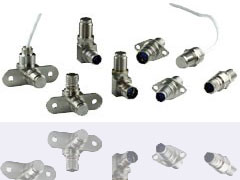

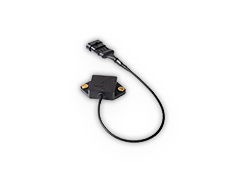

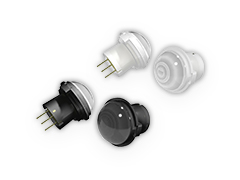

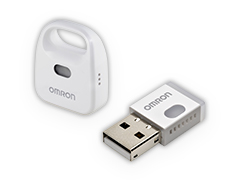

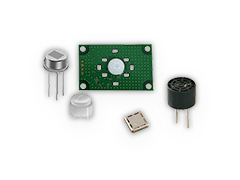

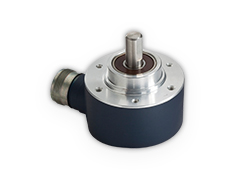
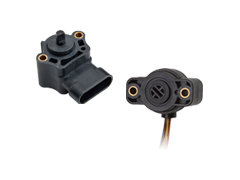

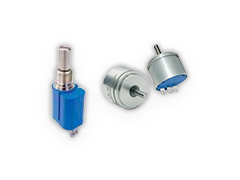
Resources
White Papers
Literature Cards

From pressure to position, temperature to humidity – if your application calls for a sensor, TTI is committed to providing the options and inventory you need. TTI’s engineers welcome the opportunity to work with you to help develop your sensor solution to meet your individual needs.
Download: Brochure
Download: Brochure
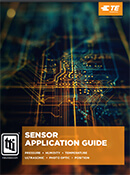
TE Connectivity (TE) is a global technology leader, providing connectivity and sensor solutions essential in today’s increasingly connected world. TE is one of the largest sensor companies in the world. TE's sensors are vital to the next generation of data driven technology. The portfolio of intelligent, efficient and high-performing sensor solutions are used for customers across a broad range of industries and applications.
Download: Brochure
Download: Brochure
Featured Suppliers